A look back at Huila - its families, its farms, and the green coffee that holds them together.
Colombia has been on our minds lately. After the earthquake that affected parts of Colombia, we watched its coffee community do the thing it always seems to do: pull together, look after one another, and keep going. We've built our green coffee around these growers, so that community isn't an abstract thing to us. We've sat in their kitchens. We walked their rows at first light. Our thoughts are with everyone affected.
It felt like the right moment, too, to look back on a trip one of our own made not long ago - up into the misty green coffee farms of Huila, where so many of the lots we love begin their life. Because the strength you're seeing from Colombia right now is the same strength you feel the moment you step onto one of these farms. It's in the families building something slowly, tree by tree. It's in the care poured into every green coffee long before it reaches a roaster. And it's in the way everyone, no matter how the harvest is going, still gathers around a cup.
Which brings us to Sophie.
Sophie is part of our Sourcing Team - one of the people who actually goes to origin. She walks the farms, cups the coffees, and sits with the growers behind the green coffee we work with. For Sophie, it was never really about the score on the table. It's about the people, the place, and every quiet step that turns a hillside of cherries into the green coffee we love.
So when the chance came to spend a few days in Huila, in the south of Colombia, she packed her bags without a second thought. She spent her days there across two farms - two families, two stories, one shared love of green coffee - and what she found is what this story is really about.
Here's how it went, in her own words.
Chasing Green Coffee Above Pitalito: A Morning at El Rancho in Huila
Up in Huila, Pitalito gives you half a day of clear sky, and it never tells you which half. You wake, read the clouds, and place your bet. That morning I bet the rain would hold off long enough to reach El Rancho. I was wrong about how easy that would be.
The mountain lets you know when the easy part is over. The pavement quits, and after that it's red dirt and whatever mood the hill is in. Every few meters you're doing quiet math - is the track firm enough, or is this the spot where the wheels go soft and we all get out to push? It narrowed until two cars couldn't pass without a conversation, so one of us watched the next bend the whole way up. A little nerve, a little luck, and the top arrived before we'd finished bracing for it.
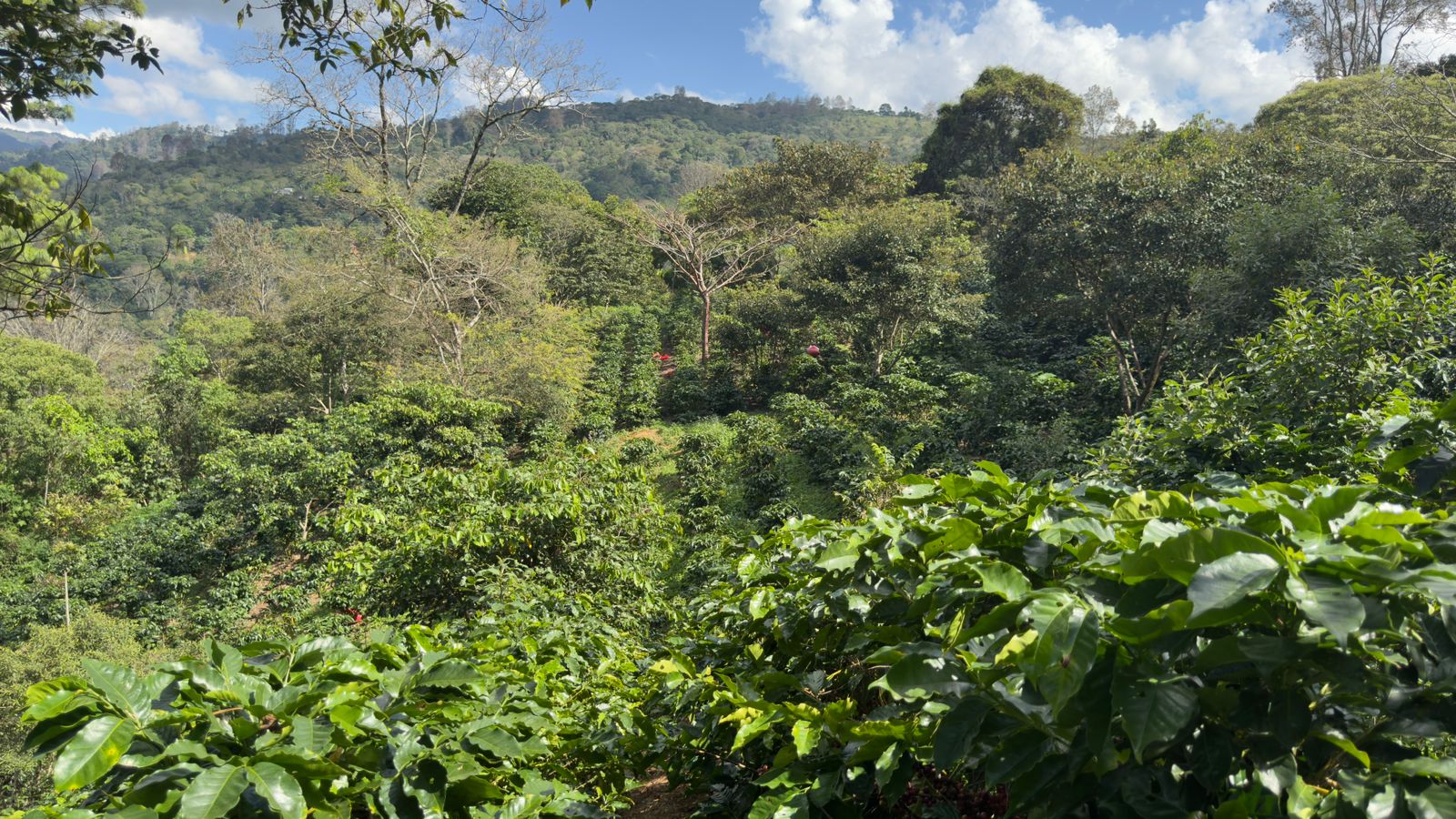
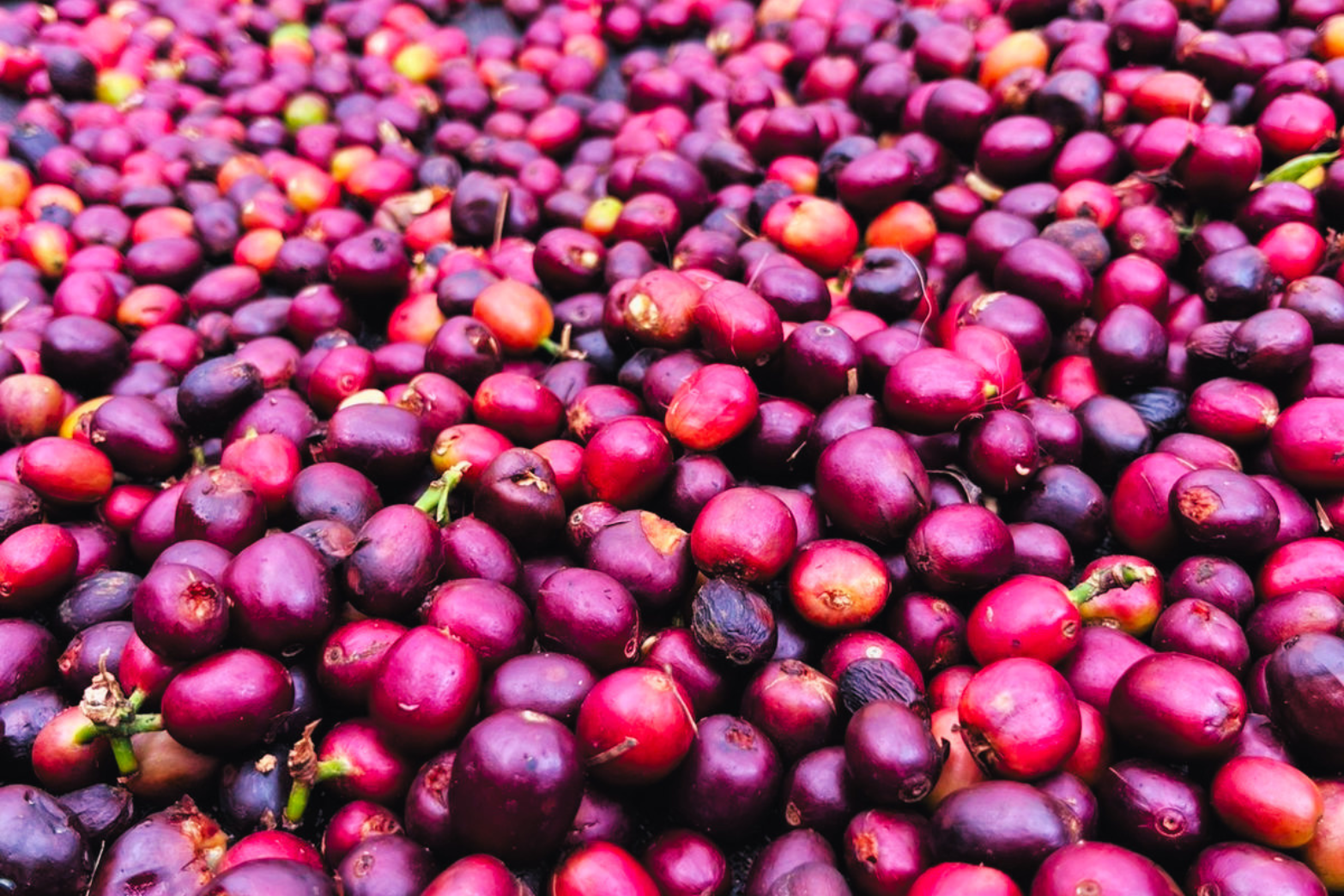
Edier was already outside when we rolled in. A dog held its ground beside him, taking our measure, while his young son kept a grip on his other hand. Behind them was the reason for the drive: rows of coffee spilling down the slope, more trees folded into that hillside than the eye wants to believe - the cherries still on the branch, months and a lot of careful work away from becoming the green coffee that lands on a roaster's table. To the left stood the house, his wife and daughter somewhere inside. There was no warming up to it. Edier pulled on his tall black boots for the mud and a hat for a sun that never bothered to arrive, and walked us straight into the plantation, already talking, already pointing things out.


He'd just replaced the roof of the drying mill, and standing there you feel the weight behind every stage of the process - the improvements you plan for and the ones that ambush you. Work with coffee long enough and the weather is always there with you, at harvest and at the mill. The top of a hill is a hard place to keep things intact: wind too strong or rain too heavy can take a facility down in a blink and cost you in ways you never saw coming. A leaky ceiling alone can undo days of a careful drying process.


Green Coffee in the Fog: Inside La Aldea Farm, San Agustín
Waking up in San Agustín, high in the hills of Huila, at this time of year means two things - birds chirping and rain pouring and to me, both make for a lovely way to open your eyes. You look through the window and see a gray sky hugged by green mountains, and you never imagined a gray sky could look this beautiful.
For all its archaeological fame, San Agustín won't let you forget you're deep in Colombian coffee country. On every corner there's somewhere to sell you a bag of beans, and every mountain carries rows of specialty coffee you can spot from far away.
Visiting a coffee farm on a rainy day is its own challenge - half an hour down muddy, slippery pathways, trying hard not to misstep. And you realise this is just an ordinary day for the producer, who walks it smoothly, a path he's done a thousand times.
When we arrived, the car had to leave us at the top of the hill; the bad weather made the entrance too risky, and the car could have been damaged or stuck along the way. So our day began by understanding the challenges these farms face daily. Luckily, we only had ourselves to carry but as we descended, Wilson told us the hard part comes at harvest, when the workers haul heavy bags of coffee on their backs, all the way up the hill to load the truck.


Just from a single visit, you realise a farm is not a half-hour, in-and-out kind of thing. First there's the getting there, then the drying area, the processing stations, the coffee plantations, and the house. Even a short tour - where you only see the work superficially - will take you half a day.
At La Aldea, Wilson first showed us the drying mill, where we got a little drying time of our own while the guard dogs, completely soaked from running around, waited for us at the covered entrance. Once you step inside, you see more than one variety drying on the ground, and the aroma of coffee fills the whole space.


From there we went back out into the rain, downhill to more of the coffee plantations, a smaller mill, and a house - likely where Wilson began, where the whole thing started. His mother, his sister, and her two children received us, and the hospitality took the form of a full breakfast.
We sat with Wilson, swapping stories as his mother brought dish after dish - eggs, rice, soup, hot chocolate, plantain. It's a plain reminder that a real meal is what carries you through a farm day, and that coffee is never one person's doing but a whole community's. The rain held steady as we ate, the little one peering out shyly from behind her mother. They'd opened up not just the farm to us, but the home.


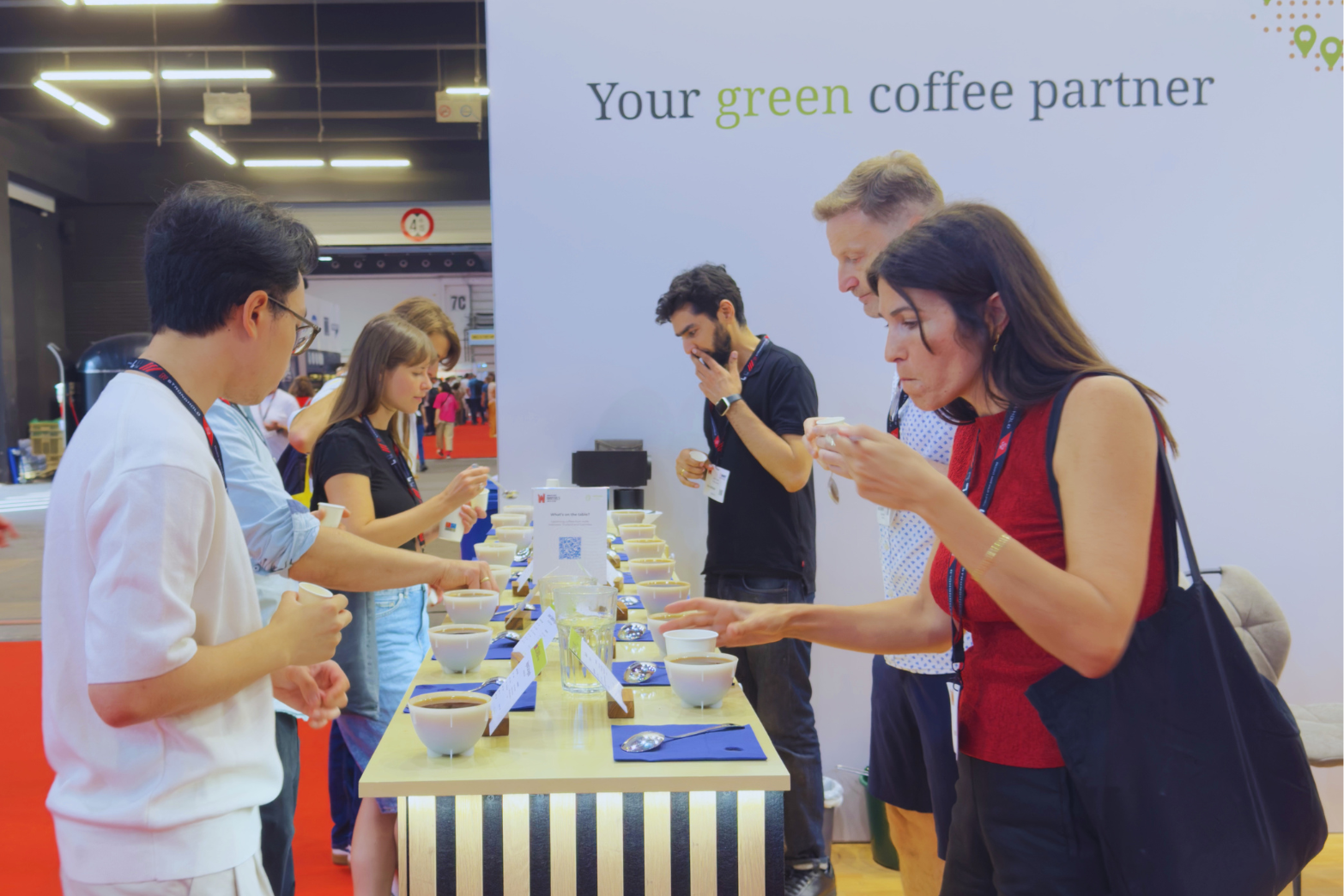
Once we arrived at the laboratory, a good setup was already waiting for us - la "Mona," Wilson's colleague, roasting some coffee, and eleven coffees ready to be cupped. Once again, you could feel the coffee reaching you in two different ways: some roasted notes, and some freshly brewed. 

We'd been talking about coffee all morning, but we kept right on going, this time around something different: the cup itself. The profile, the aromas. Even after tasting these a thousand times, Wilson and Mona cupped alongside us, keen to hear what we made of each coffee and which ones we'd pick as favourites. I'll admit I went back for a second and third taste on a few - you don't pass up good coffee sitting right in front of you.
The afternoon went by between one cup of coffee and another, between conversation about roasting coffee and the new machines they wanted to acquire to keep improving their processes. Even as we drank and enjoyed every cup, we couldn't forget everything that goes on in that laboratory: sorting the beans, removing defects, processing the coffee, packing, storing, roasting for cupping, cupping, and so much more.
What you see in the space La Aldea has created isn't just a straightforward coffee farm with nothing else. It's also a hub - to encourage coffee conversations, to spread knowledge, to share the love for coffee, even a helping hand for people just starting out. From the bean to the cup, there's a whole community behind it, supporting, producing, making the business work.
From Edier, to Wilson, to their families, and to everyone who opened a door, poured us a cup, or walked us up a muddy hill - thank you.
This is the Colombia we know: generous, proud, and endlessly resilient.The Colombian coffees we source have stories like this one behind them As affected communities rebuild , we're standing with the green coffee community that makes every harvest possible - this season, and every one after.
- Attesa Coffee, your green coffee partner.
Taste the farms for yourself
Every cup carries the mountain it came from. Bring these stories home with the green coffee we sourced at origin in Huila:
Spot - arriving October - Warsaw, PL Warehouse
☕La Aldea, Red Bourbon - Anaerobic Washed, Red Berries Yeast Inoculated · Vanilla ice cream, orange marmalade, white flowers, syrupy mouthfeel, strawberry jam aftertaste.
☕El Rancho, Ombligón - Natural, Thermal Shock, Mosto Inoculated · Strawberry, red wine, dark chocolate, intense flavour, coating mouthfeel.
☕El Rancho, Pink Bourbon - Washed, Grape Infused · Dark fruits, grape bubble gum, Black Forest cake, high intensity, buttery mouthfeel.
Pre-order - arriving Jan-Feb 2027 - Warsaw, PL Warehouse
☕La Aldea, Bourbon/Caturra/Castillo/Typica - Anaerobic Washed · Black grapes, gingerbread, cinnamon bun, winey mouthfeel, mulled wine aftertaste.
☕La Aldea, Orange Bourbon - Anaerobic Washed · Pineapple, ginger, lemongrass tea, juicy mouthfeel, floral finish.
☕La Aldea, Gesha - Anaerobic Washed · Green apple, vanilla, marmalade, creamy mouthfeel, floral aftertaste.
La Aldea, Pink Bourbon - Anaerobic Natural · Redcurrant, passionfruit, brown sugar, juicy mouthfeel, whiskey chocolate finish.
☕La Aldea, Bourbon Aji - Anaerobic Washed, Anise Yeast Inoculated · Mull wines, vanilla extract, cardamon buns, sticky mouthfeel, warm spices finish.
☕La Aldea, Typica - Anaerobic Washed, Peach Yeast Inoculated · Peach milk, mango sponge cake, mint leaf, creamy mouthfeel, chamomile tea aftertaste.
☕La Aldea, Red Bourbon - Anaerobic Washed, Red Berries Yeast Inoculated · Vanilla ice cream, orange marmalade, white flowers, syrupy mouthfeel, strawberry jam aftertaste.
☕La Aldea, Tabi - Anaerobic Washed, Pink Bourbon Mosto Yeast Inoculated · Orange jam, mixed berries, maple pie, jammy mouthfeel, honey finish.
☕El Rancho, Pacamara - Cold Washed · Red apple, lemongrass tea, maple syrup, juicy mouthfeel, chamomile tea aftertaste.
☕El Rancho, Java - Cold Natural · Lychee, coconut candy, floral, juicy mouthfeel, red berries aftertaste.
☕El Rancho, Gesha - Cold Washed · Stewed plum, red cherry, brown sugar, velvety body, sherry mouthfeel.
☕El Rancho, Sidra Bourbon - Black Honey · Dark berries, strawberry syrup, milk chocolate, buttery mouthfeel, blackcurrant aftertaste.
☕El Rancho, Red Bourbon - Natural · Strawberry, rockmelon, cherry syrup, creamy mouthfeel, rosewater finish.
☕El Rancho, Pink Bourbon - Carbonic Maceration Natural · Coconut syrup, pomegranate, strawberry jam, jammy mouthfeel, Black Forest cake finish.
☕El Rancho, Pink Bourbon - Washed, Grape Infused · Dark fruits, grape bubble gum, Black Forest cake, high intensity, buttery mouthfeel.
☕El Rancho, Ombligón - Natural, Thermal Shock, Mosto Inoculated · Strawberry, red wine, dark chocolate, intense flavour, coating mouthfeel.
Planning your Colombian green coffee lineup for Q4 2026 or 2027?
Stay in the Loop: The freshest arrivals and the most interesting lots tend to go quickly. Join our newsletter for early word on new harvests, fresh arrivals, and exclusive offers - everything you need to plan ahead, straight to your inbox. Subscribe Now!
With arrivals running late and prices firming, there's never been a better year to plan ahead with Attesa Coffee - your green coffee partner, where origin, quality, and trust come together.
Reach us at - hello@attesa.co