Colombian Green Coffee Prices: The Currency Squeeze Explained
Why green coffee prices from Colombia aren't easing the way you'd expect - and what's really going on in the Colombian coffee market.
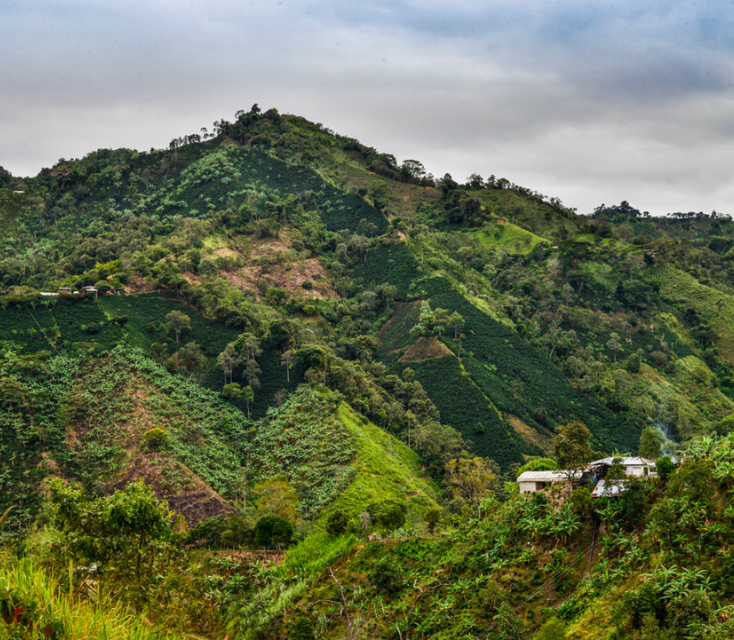
It's part of the green coffee story- yet this year it's quietly shaping both what Colombian green coffee costs and how much Colombian green coffee is actually available. For buyers of green coffee, understanding what is happening at origin is becoming just as important as watching the market price.
It starts with a currency mismatch
There is a simple currency issue behind every bag of Colombian green coffee: the coffee is traded internationally in US dollars, while most of the costs of producing it are paid in Colombian pesos.
Growers and exporters receive dollars when they sell Colombian green coffee into the international market. Their costs, however, are largely in pesos - labour, transport, fuel, fertilizer, taxes and everything else involved in producing and moving green coffee.
Normally, the exchange rate moves around without having a dramatic effect on the green coffee market. This year has been different.
The Colombian peso has strengthened considerably against the dollar, changing the economics for producers and exporters at origin. That change is now feeding into the way Colombian green coffee is priced and sold.
A stronger peso is squeezing growers
Over 2026, the Colombian peso strengthened by around 23% against the dollar, making it one of the stronger-performing emerging-market currencies.
That matters because a stronger peso means that each dollar earned from Colombian green coffee converts into fewer pesos than it did before. At the same time, the costs of producing Colombian green coffee have not fallen by the same amount.
So even if the dollar price of green coffee looks relatively stable, the amount a Colombian green coffee producer receives in local currency can be significantly lower.
This is where the pressure is being felt.
For a producer, the question isn't simply what Colombian green coffee is worth in dollars. It's what that sale ultimately means in pesos after the currency conversion, and whether it covers the cost of producing the next crop. For producers working with tight margins, that difference can have a real impact on when and how they sell their green coffee.
The situation is also being watched closely because Colombia's central bank raised interest rates in June to help bring inflation under control. Higher interest rates can support the peso further by making Colombian assets more attractive to foreign investors.
For buyers, this part of the market can be easy to miss. The currency movement is happening in the background, but it can have a direct impact on Colombian green coffee availability and pricing. It can also influence how quickly green coffee moves from producers and exporters into the international market.
One of the main reasons Colombian green coffee is harder to source right now.
From a producer's perspective, holding onto green coffee can make sense when the current exchange rate doesn't give them the return they are looking for.
Some producers are therefore choosing to wait rather than sell immediately. If enough producers make the same decision, less Colombian green coffee reaches the market at any given time. That means buyers looking for specific green coffee can find that availability is tighter than the headline market numbers suggest.
That is happening alongside some other important supply factors.
Colombia's mid-year harvest was around 10% lower than the previous year, while global green coffee stocks remain at historically tight levels. There isn't a huge amount of extra green coffee sitting around to absorb another reduction in available supply.
On 10 August, a powerful magnitude 7.4 earthquake hit western Colombia, including parts of its coffee-growing region. The loss has been significant, both human and material. Processing, logistics and exports across the worst-hit areas were suspended, and the effects are still working their way through the Colombian green coffee supply chain as communities rebuild.
For anyone buying green coffee from Colombia, these disruptions matter because availability is not only about how much coffee was harvested. It is also about how much green coffee is being released, processed, transported and made available to buyers.
What it means for green coffee buyers
Line it all up - a stronger peso, growers holding back, a smaller harvest, thin green coffee stocks, and the recent disruption - and it all points one way. Colombian green coffee prices are likely to stay firmer than the headlines might have you expect, and that firmness is showing up right across the green coffee market.
That's not a reason to worry. It's a very workable market once you can see what's driving it, and a bit of forward planning goes a long way. The quality of this year's Colombian green coffee is holding up, and the main thing is simply knowing that the price on the screen is only half the story.
If you're buying Colombian green coffee for Q4, early 2027 or further ahead, it is worth looking beyond today's price and considering availability, harvest timing, currency movements and how much green coffee producers are actually willing to sell.
That's particularly important when building a longer-term green coffee programme. A price that looks attractive on paper may not tell you much about how easy that coffee will be to secure, particularly when green coffee availability at origin is changing.
Colombian green coffee remains an important part of the global green coffee market, and there is still plenty of good green coffee available. But this is a market where understanding what is happening at origin can make a real difference to buying decisions.
For green coffee buyers, the takeaway is fairly simple: keep an eye on the currency as well as the market, stay close to your suppliers, and plan your green coffee requirements with enough time to react to changes at origin.
Every origin has a story like this one, and Colombian green coffee always rewards a closer look.
At Attesa Coffee, that's the perspective we bring as your green coffee partner: not just what the price is today, but what is happening behind it.
(Markets move, and the figures here reflect mid-2026 so take this as a general read on Colombian coffee rather than financial or trading advice).
Curious about Colombian green coffee this season, or about green coffee more broadly?
We'd love to talk any time - reach out at hello@attesa.co.